Affy Bhatti
•02 Oct 2025
•9 min read
Skilled Work Visa 491: Your Guide to Regionally-Sponsored Work in Australia

If you’re a skilled worker looking to build your future in Australia, the Skilled Work Regional (Provisional) Visa, Subclass 491 might be the path you’ve been searching for. It’s not just paperwork; it’s an opportunity to contribute to vibrant regional communities, set down roots, and eventually move towards permanent residency.
We’ve put together this guide to walk you through everything: what the 491 visa is, how to apply, and what to watch out for along the way. Think of it as your roadmap to feeling prepared, not overwhelmed.
What Is the 491 Visa and Who Is It For?
Before we get into forms and points, let’s zoom out. The 491 visa is Australia’s way of inviting skilled people to help regional towns thrive. It gives you and your family up to five years to live, work, and study outside of Sydney, Melbourne, and Brisbane. That means places like Adelaide, Perth, Canberra, or Geelong and the Gold Coast, areas full of opportunity but not overcrowded.
For many migrants, this visa becomes the bridge to permanent residency. After three years of regional life, you could apply for the Subclass 191 visa, which locks in permanent status.
So, if you’ve been dreaming of a secure future here, the 491 is more than a visa. It’s a pathway to belonging.
Am I Eligible?
This is the part that trips many people up, but let’s break it down. To be eligible, you’ll need a few things in place:
- A nomination from a state or territory government or sponsorship from an eligible regional relative.
- Your occupation must appear on one of the Skilled Occupation Lists.
- A positive skills assessment from the relevant authority.
- At least 65 points on Australia’s migration points test (based on age, English level, experience, and education).
- To be under 45 years old when invited.
- Competent English (think IELTS 6 or equivalent).
- Clean health and clear police checks.
It sounds like a lot, but remember: many people meet these without realising it. The key is planning and ticking each box carefully.
Your Roadmap: The Application Process
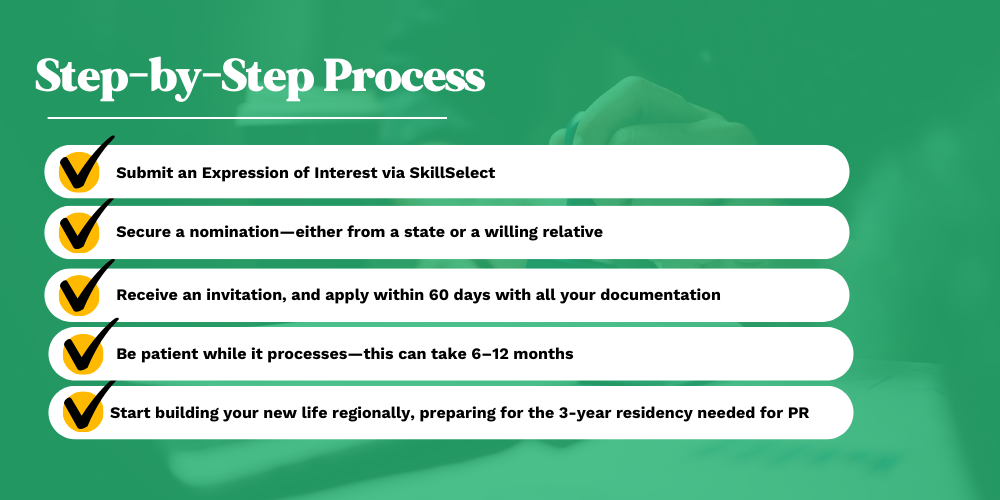
Getting this visa is a journey, not a race. Here’s how it typically unfolds:
- Submit an Expression of Interest via SkillSelect.
- Secure a nomination—either from a state or a willing relative.
- Receive an invitation, and apply within 60 days with all your documentation (skills, health checks, police clearance).
- Be patient while it processes—this can take 6–12 months.
- Start building your new life regionally, preparing for the three-year residency needed for PR.
It may feel long, but each step brings you closer to your future. Preparing early makes the journey smoother.
The Benefits and What to Know Upfront
Living regionally brings both opportunity and responsibility. Here’s what to expect:
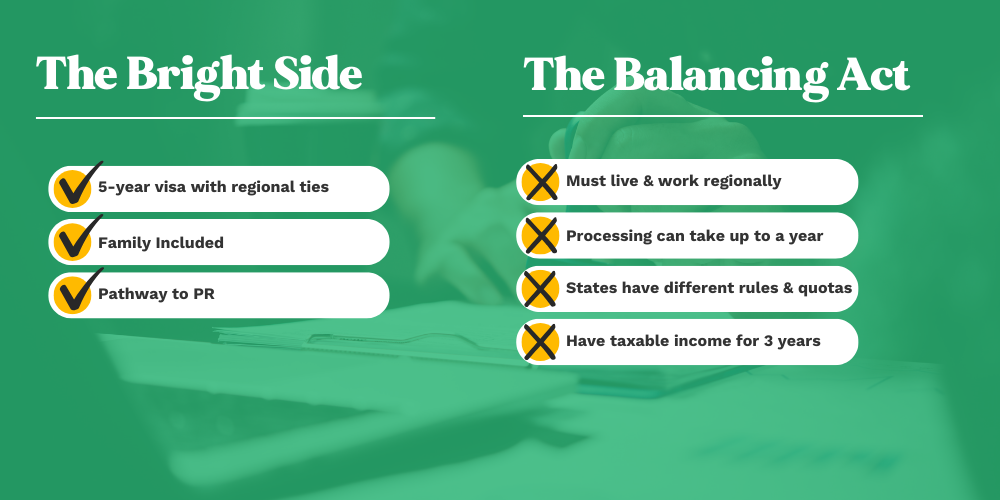
The Bright Side:
- Secure 5-year visa with strong regional ties
- Bring your family — partners and dependent children included
- Unlock access to Medicare
- Greater affordability and community connection away from the city hustle
- Pathway to Permanent Residency after 3 regional years
The Balancing Act:
Must live and work in designated regional zones only
Processing can take up to a year. (So start early!)
Each state has different criteria and quotas (more on that soon)
To transition to PR, you’ll need taxable income from a regional job of three years.
This isn’t just paperwork, it’s life in motion. Knowing what’s expected keeps that motion smooth.
Regional Pathways: How States and Territories Differ
One of the most important parts of the 491 process is where you apply. Each state and territory sets its own rules, targets, and streams. Let’s take a tour:
- New South Wales (NSW): Requires regional work experience, study, or job offers. Offshore candidates with significant experience may also qualify.
- Victoria (VIC): Strong focus on applicants with job offers and 12 months of regional work. Student graduates can sometimes access streamlined pathways.
- Queensland (QLD): Typically asks for 3 months of regional residence plus a 12-month job offer.
- South Australia (SA): Known for broad occupation lists, streams include skilled employment, graduate, and offshore high-demand pathways.
- Western Australia (WA): Requires a year of local work experience or a job offer. Graduate streams are available for those who studied in WA.
- Tasmania (TAS): Several options, including graduates from local institutions, those with 6+ months of full-time work, or offshore applicants with skills on priority lists.
- Australian Capital Territory (ACT): You must have lived and worked in Canberra for at least 3 months before applying.
- Northern Territory (NT): Requires at least 6 months of residency and full-time work, with graduate and offshore streams available.
Each state also has an allocation of spots for the year. For 2024–25, NSW, Victoria, and WA received the largest quotas (around 2,000 each), while smaller states like Tasmania, ACT, and NT had between 700–800.
The Ups and Downs: Benefits and Pitfalls
The 491 visa comes with both pros and cons. If you know anyone going through the process, start a conversation with them and learn about what they’re enjoying about it, as well as any setbacks they’ve encountered. Here are some common points we hear about.
| Pros | Cons |
|---|---|
| Path to PR in 3 years | Full-time regional living required |
| Family included | Varying state quotas & eligibility |
| Healthcare access (Medicare) | Planning required—processing may be 6–12 months |
| Cost-effective lifestyle | Need to meet taxable income thresholds |
| Supportive regional communities | States differ on occupation lists and streaming |
The 491 gives you freedom in the long term, but structure in the short term. You’ll know exactly what you need to do — live in regional areas, work in your field, and contribute to the community. In exchange, Australia offers you and your family stability, access to services, and eventually a shot at permanent residency.
Common Mistakes and How to Dodge Them
Many people have gone through this lengthy process only to be snuffed by these mistakes. Be thorough with the whole process, and you’ll have a smooth experience.
- Assuming state rules are the same across Australia, every state has its own playbook.
- Underestimating paperwork—missing documents are the most common application hang-ups.
- Aiming for just 65 points—having extra points gives you a cushion and options.
- Ignoring regional income requirements for PR—starts counting from day one.
Preparing to Apply: Your Checklist
A smooth application starts long before you hit “submit.” Ask yourself:
- Do I know which state is the best fit for my skills?
- Is my occupation on the current list?
- Have I completed a skills assessment?
- Do I have a valid English test result?
- Is my police clearance up to date?
- Have I calculated my points accurately?
- Am I prepared for health checks?
The more prepared you are, the more confident you’ll feel.
Your Regional Journey Starts Here
The Subclass 491 Visa is more than a way to extend your stay in Australia. It’s a chance to set roots in communities where you’ll be valued, contribute your skills, and start your pathway to permanent residency.
Yes, it requires commitment to regional living, careful preparation, and patience. But the security, stability, and belonging, make the reward that makes it worth it.
For newcomers exploring their future in Australia, the 491 is not just a visa. It’s a gateway to the life you’ve imagined.
Additional Resources
Department of Home Affairs – Official 491 Visa Guide
This is the primary source of truth for requirements, conditions, and the application process. Every applicant should start here.
immi.homeaffairs.gov.au – Subclass 491 Visa
State and Territory Nomination Websites
Because each state sets its own nomination rules, checking the site for the region you want to live in is essential. A central place to start:
VisaEnvoy – 491 State Requirements Overview

1023 views
Recent Posts
See All